Why Beginner-Friendly Tech Spaces Still Feel Hostile—And Why No One Wants to Admit the Real Reason
This isn’t about “bad apples.” It’s not about introverts vs extroverts. It’s about governance—or more accurately, the total absence of it.

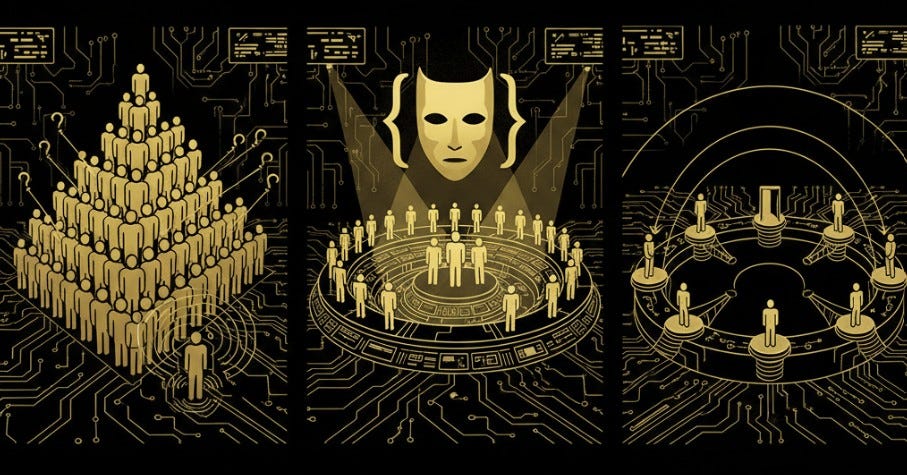
Every tech event claims the same thing: “We welcome developers of all levels!”
And yet, somehow, you walk in and feel yourself shrink.
Not because you’re inexperienced. Not because you’re insecure. But because the room is running a script—a script older than most of the frameworks people are arguing about.
This isn’t about gender, though gendered dynamics absolutely show up.
It’s about governance.
Tech Is a Status Economy Disguised as a Community
Developers are trained—socially, professionally, and culturally—to perform certainty, cleverness, speed, mastery, and “I already know this” energy.
And they are punished for curiosity, humility, slow learning, beginner questions, and not performing confidence on command.
So when a newcomer walks in, the default behavior isn’t welcome. It’s evaluation.
Not “Who are you?” but “How competent are you, and how quickly can I categorize you?”
This is the part no one wants to say out loud because it breaks the illusion that tech is a meritocracy with a warm, fuzzy center.
The Silent Test Every Newcomer Gets Subjected To
If you’ve been to enough tech events, you know the pattern:
“What do you work with?” “How long have you been coding?” “Have you tried X?” “Oh, you don’t know that?”
These aren’t questions. They’re probes.
They’re not trying to get to know you. They’re trying to place you in the hierarchy.
And once they decide you’re “junior,” the social behavior shifts. They talk around you. They talk over you. They talk to each other as if you’re not there. They treat you like a spectator, not a participant.
It’s competence theater, and you’re the unwilling prop.
Why the “We Welcome All Levels” Promise Collapses Instantly
Because it’s marketing, not governance.
Most tech events have no norms, no stewards, no facilitation, no onboarding, no anti-status rituals, no mechanisms to protect newcomers from being socially sidelined.
Without structure, the room defaults to hierarchy.
Humans drift toward familiarity, safety, and status. Developers drift toward people who speak their dialect of competence.
The result: a room full of people who think they’re being welcoming while behaving in ways that are socially hostile.
And Yes—Women in Tech Can Replicate the Same Hierarchy
This part makes people uncomfortable, but it’s true.
Women in tech are often navigating male-coded competence norms, pressure to prove they belong, fear of being mistaken for “the beginner,” and the need to differentiate themselves from other women.
So some respond by gatekeeping harder, policing appearance, distancing themselves from newcomers, and aligning with the dominant hierarchy instead of challenging it.
This isn’t about gender. It’s about internalized hierarchy.
When a system rewards proximity to power, people replicate the system.
Why People Refuse to Name the Real Problem
Because naming it forces them to confront their own insecurity, their own complicity, the fragility of their identity as “the smart one,” the fact that they don’t know how to build community, and the gap between their self-image and their behavior.
It’s easier to say “We’re inclusive!” than to ask, “Why do newcomers consistently feel invisible here?”
It’s easier to blame the newcomer’s feelings than to examine the room’s architecture.
The Real Issue: Tech Doesn’t Have a Kindness Problem—It Has a Governance Problem
If you want a genuinely beginner-friendly space, you need more than good intentions.
You need architecture.
Without explicit norms, stewards who intervene, structured onboarding, facilitation that distributes attention, and mechanisms that protect newcomers from being sidelined—the room will always revert to hierarchy.
Not because people are bad. But because unstructured spaces always privilege the confident, the loud, and the socially fluent.
The Uncomfortable Truth
Most tech events aren’t communities. They’re unmoderated status arenas with free pizza.
And until we stop pretending otherwise, newcomers will keep walking in hopeful and walking out smaller.
Not because they lack skill. But because the room lacks governance.
If We Want Better, We Have to Build Better
Beginner-friendly spaces don’t happen by accident. They happen by design.
And design is a discipline—one tech culture keeps outsourcing to vibes.
If we want spaces where newcomers feel seen, not scanned, we need to stop relying on slogans and start building actual structure.
Because at the end of the day:
Tech doesn’t need more kindness. It needs more architecture.
The diagnostic tool that follows is not commentary. Tools live behind thresholds. If the framework supports your work and you want continued access to these governance artifacts, $5/month keeps the discipline sustainable.